Showing posts with label Literary fiction. Show all posts

Friday, 10 February 2012

Babel Tower

One of my top ten books is Possession by A. S. Byatt and so it stands to reason that I would like other books by the same author. I read Angels and Insects and wasn't blown away. I bought Babel Tower and it has sat on my bookshelf for ten years. Part of the reason I haven't read it is that it is a hardback and is 615 pages. The other part is that I was worried I wouldn't like it. Oh, how wrong I was.

On the surface it is the story of Frederica Potter, a woman who was a Cambridge graduate in the early 1960s, then her sister died and while she was grieving she married an inappropriate man. At the start of Babel Tower Frederica has a two year old and is realising that she made a mistake in her marriage. When she runs into an old friend it accelerates this realisation. The cracks in her marriage widen and her husband becomes extremely jealous and violent. After he hits her with an axe, she leaves and begins a life in London.

There Frederica renews old friendships and makes new ones, including one with the author of a book which is tried under the Obscenity Act. At the same time, Frederica starts divorce proceedings. What the book is really about is the terrible position and treatment of women in the 1960s and it is very feminist. It is also about the nature of art and about obscenity, morality and freedom of expression.

The quality of the writing is astonishing. It was so rich and complex without ever becoming florid. I wish I could write like this. On every page I was in awe. It is the third in a series of four and, of course, I haven't read any of the others but it easily stands on its own. Byatt is a literary writer who is gripping, tense and utterly absorbing. This was amazing and I could barely put it down. You should definitely read it.

Saturday, 24 December 2011

100 Books in 2011: The Post Office Girl

The Post Office Girl by Stefan Zweig was the last Book Club book of 2011. I didn't think I would enjoy it, but actually I loved it.

Christine is a young woman living in Austria in the years after the first world war. Life is hard, there's not enough money and the rooms she lives in with her mother are permanently damp.

Her aunt, who emigrated to the US before the war, is touring Europe and invites Christine to join her in a ski resort for a week or so. Her mother is too ill to go, so Christine goes instead. Her aunt and her husband are very rich and Christine is catapulted into a world of luxury.

But it comes to an abrupt end when gossip starts that Christine is not wealthy and is in fact a poor girl dressed up in her aunt's clothes. Christine returns home to find her mother has died and everything seems so much grimmer now.

Life goes on and Christine feels ever more estranged from the village. She decides to spend weekends in Vienna to try to recapture the glamour of her holiday. While she is there she visits with her sister and brother-in-law, Franz. On one occasion her brother-in-law runs into Ferdinand, who he had known in the war. In a quirk of fate, Franz got sent home and Ferdinand spent two years as a POW in Siberia. Ferdinand is bitter and disappointed at the arbitrariness of life and Christine finds her soul mate in him.

Their affair is made grim and joyless by their consciousness of their poverty and eventually begins to fizzle out. Then, unexpectedly, Ferdinand comes to see Christine in the post office because he has been laid off. He has a plan for them to commit suicide together and Christine agrees, but then Ferdinand discovers how much money is kept at the post office and hatches a new plan to steal the money ad flee to France. The book ends with him presenting his plan to Christine and asking if she wants to go along with it.

From a slightly slow start, this develops into a really fast-paced book. The pace is achieved by a POV tight into the head of the POV character resulting a stream of consciousness type narrative that is quite breathless. The emotion is ramped right up and it borders on melodrama at points. For me, that worked brilliantly. The swirl and joy and freedom of the two weeks Christine has in an environment where money appears to be limitless leave the reader as giddy as Christine. And then the plunge back into the grim, grinding, drabness of her life without money is just as all-consuming.

I liked the depiction of the relationship between Christine and Ferdinand. They didn't seem to like each other much, but the fact that they understood each other in a way no one else could bound them together. They shared despair and a sense of unfairness.

The ending was a bit strange, and lost the tone of the rest of the book. I suspect this is due to it having been published post-humously. Despite that, I really enjoyed this. It was difficult to put down, moving and the social commentary is still, tragically, relevant.

Tuesday, 19 July 2011

100 Books in 2011 Challenge: The Auschwitz Violin

This one raises an interesting question: is it ok to not like a book on this subject? The Auschwitz Violin by Maria Àngels Anglada, trans. Martha Tennent, is the story of a violin maker interned in Auschwitz who is ordered to make a violin for the camp Commander. He does this amid the starvation and terror of life in the concentration camps.

This is a novella, or at around 25,000 words, a long short story. Looking at it as a short story makes the structure make a bit more sense. What I missed in this book was depth. Life in the concentration camps was horrific and I've read a few thing dealing with that subject. Yet it doesn't come across here. I get the sense that the horror is being skated over. Maybe that's a matter of taste - I do, after all, like visceral writing. Or maybe it's an issue of courage. Perhaps the author didn't want to commit to describing the conditions in Auschwitz in gory detail. I can see how that can seem gratuitous. Unfortunately, for me, that made it hard to connect to the fortitude of the protagonist. It didn't seem like that much of an heroic struggle because the impact of the environment wasn't fully brought out.

The writing itself is good and the story has great potential. I just found myself questioning the choices of the author about the structure of the story and what she chose to show. All the way through, I was thinking that I might have done it differently.

So, this book didn't really do it for me. I felt distanced from the story by the technique. I'd read this story if it was re-written by someone else. And yet I feel a bit uncomfortable saying that I didn't like the book because of the subject matter. If you like literary fiction, and don't like horror, then this may be for you. It was a bit too sanitised for my taste.

Wednesday, 26 January 2011

100 Books in 2011 review: Alone in Berlin

Book club is off with a bang this year. January's choice was Alone in Berlin by Hans Fallada (trans: Micheal Hofmann) and I loved it from the from start to finish.

Otto, an ordinary German living in a shabby apartment block, tries to stay out of trouble under Nazi rule. But when he discovers his only son has been killed fighting at the front he's shocked into an extraordinary act of resistance, and starts to drop anonymous postcards attacking Hitler across the city. If caught, he will be executed.

Soon this silent campaign comes to the attention of ambitious Gestapo inspector Escherich, and a murderous game of cat-and-mouse begins. Whoever loses, pays with their life.
The opening chapter is one of the most powerful I've ever read. I read on the train and I was bawling my eyes out. Michael Hofmann's translation is perfectly pitched and Alone in Berlin is an easy, fast read. Which may be surprising given the subject matter.

Fallada's characterisation is exquisite. All of the characters are individuals and they come alive on the page. There are no stereotypes or stock characters here. And each character, regardless of how nice they are, is treated with empathy. Through these people Fallada shows how easy it is for civilization to crumble. The state can encourage the basest behaviour through making difference illegitimate, dissension dangerous and rewarding obedience. Systematic terror makes it hard to be a good person and easy to take advantage of the less fortunate. And it happens slowly, insidiously, until before you know it the world you thought you lived in is gone.

I love moral ambiguity and Alone in Berlin is replete with it. The Quangels made daily acts of resistance that achieved nothing except giving them back their self-worth. And you might say that knowing in your heart that you didn't completely give in is important, yet Anna and Otto's actions eventually damage the lives of several of the people around them. Their resistance had a tangible cost and an intangible outcome. Was it really the right thing to do? Should they have done something more? And this isn't the only time the question of right and wrong is raised with complex, unclear examples. It's not easy and all the pain of living with your choices is laid bare in this novel.

Alone in Berlin is an excellent example of an author that shows and rarely tells. We know who these people are because of what they say and do, not because the author tells us who they are. And this is a book originally written in 1947 so the omniscient POV is used and on occasions Fallada gives himself permission to use the authorial voice. Another member of the book club (who read the book in German) says that Fallada uses the Dickensian tradition of giving characters names that describe them.

If you like fiction that strips away the vanity of civilization and shows us what we are, what we can be, with brutal, uncompromising truth, then you will love this. For me, this is one of the best books I've ever read.

Wednesday, 19 January 2011

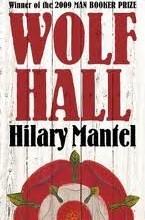
Thoughts on reading: Wolf Hall

I've been putting this one off since the end of September. It felt a bit like hard work. Wolf Hall by Hilary Mantel was the Book Club book for September but this time I can't blame the Book Club for making me read something I wouldn't have touched otherwise because there was already a copy on book mountain when it was suggested.

It was winner of the 2009 Man Booker prize and I don't often read those, but sometimes they pique my interest. Reading this was a strange experience and I think the reason is that there are a lot of things that I like about this book but in the whole, I didn't enjoy it.

I loved the character of Cromwell. Mantel made him really sympathetic without compromising the hardness of his character. The description was lush and vivid, full of sound, smell, touch and movement, and using metaphor to work every ounce of worldbuilding out of it. It was loaded with symbolism - and I did like that because I felt I understood what was being conveyed. Sometimes I read books that are heavily symbolical and I feel like I speak a different language to the author because, although I recognise that an object is a symbol, I'm clueless as to what it's a symbol of. Not in this case and I found it quite instructive in how symbolism can be used in a way that supports description and setting. Rather than being wanky.

The viewpoint in Wolf Hall is quite experimental. It is in limited third person and is so tightly held to Cromwell that it is almost first person. It's also in the present tense which is hard to sustain over 160,000 words. That was impressive but I wondered if this was the reason I found this book very hard to read. It was so slow. It took me a good couple of weeks and I spend at least two hours a day reading and I'm a fast reader. But I recently read another book in the present tense, of about 140,000 words, and that was a very quick read. Both would also be considered literary fiction, so it's not the genre. The length of it was off-putting to some members of the book club, but what's 160,000 words in epic fantasy? Nothing! Anyhow,  it was hard work. So much so that I had to stop in the middle and read a Charlaine Harris. I think what Mantel did with the viewpoint and tense was really interesting but it spoilt the enjoyment of the story for me.

I liked the title, but in the end I felt that that was misleading. We don't get to Wolf Hall until the end of the book and although in the author interview at the back of the book, Mantel says that Wolf Hall is a metaphor for Henry's court, I didn't get that. And given that her use of metaphor was so effective throughout I don't believe that she meant that. I think she just liked it as a title and used it even though it wasn't quite right for the book.

There was a lot I liked about this book and I wanted to enjoy it. Because it was so slow and such hard work to get anywhere with, I didn't enjoy it. In spite of all the things I liked about it. In spite of a great character, brilliant dialogue and gorgeous writing. I was frustrated and disappointed.

Friday, 14 January 2011

Thoughts on reading: A House for Mr Biswas

You know there are some books that you're really supposed to like, or at least pretend to like. A House for Mr Biswas by V. S. Naipaul is one of those. All the world appears to think it's great.

This was the December read for my book club and I don't think I would have ever read it otherwise. I'm going to start with the good. The prose was gorgeous; it was incredibly well-written. I've never given much thought to life in Trinidad between the two world wars and the setting is vividly drawn. The social relations and culture described were new to me and I liked that. The characters were equally well realised. In technical terms it was clearly brilliant.

And I just didn't like it. Which I suppose answers the question of what matters more, the writing or the story, because all that beautiful writing couldn't make this story interesting to me. It is a fictional biography of a horrible man who has horrible relationships with other horrible people. It's supposed to be a comedy but I didn't get it. It was a struggle to finish it and I only did because I have a rule about finishing books I start. Unless you're already a fan, give this one a miss.

Friday, 17 December 2010

Thoughts on reading: Corum

I'm working my way through Michael Moorcock's The Eternal Champion series and recently I read Corum. Elric is one of my favourite characters in literature and I enjoy the self-conscious/aware nature of the multiple worlds cycle that is the Eternal Champion. Although one might argue that Moorcock is simply telling the same story over and over again. Of course, there is an art in that. Multiple interpretations of the same story layer up into a deeper understanding of the themes that are explored.

Corum comprises The Knight of the Swords, The Queen of the Swords and The King of the Swords. The language is amazing; the descriptions are lush and full of depth. Characterisation is not so deep, because the characters are ciphers. They perform the function of metaphor. What is happening here is myth not story.

Moorcock is the literary end of science fiction and I think you either like it or you don't. Or at least, that's true for me. I usually don't have much time for literary fiction because it turns out I'm all about the story. However, Moorcock's worlds are so fantastic and the description so beautiful that I am completely engaged. I find Moorcock much easier to read than most literary fiction.

I also enjoy the links with the other works and in the last volume of Corum, Elric makes an appearance, so that's good. I enjoy the layer where the story is inviting the reader to compare it with its other versions in the Eternal Champion multiverse.

I enjoyed it. Corum's not as good as Elric though.

Thursday, 29 July 2010

Thoughts on reading: We Have Always Lived in the Castle

July's bookclub book was We Have Always Lived in the Castle by Shirley Jackson. This is a weird little book about two women who live in seclusion in the family home after one of them has killed the rest of the family.

I liked the style of the book. The language was quite poetic and magical. There was a sense of unreality as we were viewing the world through the point of view of a narrator with, probably, mental illness. The setting was given richness and depth by the lushness of the language. Merricat's mental and emotional life is vividly realised; the scenes where the villagers express their fear and hate are moving and her desire to be safe is understandable.

What was frustrating was the amount of the story that was kept from the reader. I wanted to know what had happened, why the villagers hated them, why the girl had killed her family. But I'm the sort of person that likes to understand things, to know why, and I think that probably says more about me as a reader. Thinking as a writer, I can see that it is tempting to include everything you know about a story, and what power Jackson gives her novella by witholding so much information.

I'm not sure I enjoyed reading this - it is literary fiction after all - but it was very well written and there's lots to learn from it.

Saturday, 24 July 2010

Thoughts on reading: The Bluest Eye

I discovered I could edit on the train so I wasn't reading for a while. I've got as far as I can with editing the current work-in-progress; it now needs more writing and I can't do that on the train quite so well. That does mean I'm reading again which is no bad thing as active reading leads to better writing.

The Bluest Eye is Toni Morrison's first novel. I wanted to read it as it deals with the impact of cultural conceptions on beauty on people who don't, and can't ever, be beautiful on those narrow terms. And Toni Morrison is an important writer whose work I haven't before read.

In the introduction to the edition of The Bluest Eye that I had, Morrison talked about what she had tried to achieve and how she felt that she'd failed. She'd tried to tell the story of a person who is smashed by rejection, who had no self from which to speak because she had internalised the dismissal and hate. To do this, she used a variety of voices to relate a number of incidents that build up to a picture of the child that results. Morrison doesn't feel she succeeded. As I don't know what she was trying to do, I can't say, but it seems to me that what she wrote was exceptional.

What I particularly took from this novel was the way in which Morrison manages to convey accent and rhythm of speaking with word choice and sentence structure. She doesn't rely on dialect spellings to give her characters authentic voices, meaning the reader doesn't need to work out how things are supposed to sound. She uses words that were contemporary to 1950's Black America and structures her sentences in ways that mimic the rhythm of this type of speech. She allows the world of the novel to be built up quickly without distracting the reader from the story.

The second learning point for me was around structure. The novel has four sections which correspond to the seasons and in each section a part of the story is told by a number of different characters. It isn't chronological for the seasons aren't necessarily in the same year. Each event adds another layer to the story of the life of a child until you see just how brutalised she is, and just how unintentional most of it was.

In her introduction, Morrison says that few people were moved by The Bluest Eye - I certainly was.

Sunday, 14 February 2010

Adventures in reading

It's been a while, but mainly because I've been writing a short story, so no apologies. Since I've been away I've cracked through lots of books and thus here comes a huge post.

Following on from the epic Martin Chuzzlewit I finished off Nudge: Improving Decisions about Health, Wealth and Happiness by Richard H. Thaler and Cass R. Sunstein, one of the many half-read books lying around my house. It had some interesting material but there are better examples of this type of book out there.

Moving on from there I felt that I wanted something light, so I chose A Wicked Liaison by Christine Merrill. It's a Mills & Boon Historical Romance and quite far from my usual choice. I have it (and a few others) because my writing group did a workshop on writing for Mills & Boon and getting some examples was for follow up research. Anyway, I feel violated. On a content level, this offended me. On a writing level it does offer some interesting observations of what is missing from the book. What is there is well written, it's just that there is so much that is left out. There is very little world building (as it is set in Regency London). We are offered little in the way of description, hardly any smells, sounds or kinesthetic input. The book takes place completely in the mind and we are entirely caught up in the thoughts of the two protagonists. This does make it very intense but the inner monologues are quite repetitious. Ugh. Did not like.

My non-fiction interlude was Earth Path by Starhawk, which I loved.

Then, due to an unscheduled trip to Doncaster, I read February's book club book, The Reluctant Fundamentalist by Mohsin Hamid. It was an interesting style. The author chose a monologue for the whole book and the writing was wonderfully tight. What was there was very well done but, for me, the style made it distancing. It felt like an intellectual novel not an emotional one. Disappointing, because it could have been much more powerful.

After my unpleasant toe-dip in to romance, I felt a strong need to return to speculative fiction, in the form of The Three Stigmata of Palmer Eldritch by Philip K. Dick. I find that Dick's novels are very much the fiction of ideas. I did notice lots of new words for not-so-new concepts and at one point it did feel a bit overwhelming. I loved the idea of stress being measured in units of Freuds. Having said that, the world-building was great. The book plays with the idea of reality, the nature of god and altered states of consciousness. I really liked it.

Following that I read The Introverted Leader: Building on your Quiet Strength by Jennifer B. Kahnweiler, which I found really inspiring and helpful.

Then I picked Poison Study by Maria V. Snyder (I'm noticing a lot of people using middle initials today). I think I'm going right off the use of the first person in the long form. The story had potential but the writing was unsophisticated. I couldn't make up my mind up whether it was YA fiction or not; in the end I decided that even if it was, it could still be held to the same standards as anything else. There was too much tell and too much 'Yelena had worried about/planned for/thought' where we hadn't been given that previously. The world-building and characterisation lacked depth. It also committed the cardinal sin (in my eyes, at any rate) of not being internally consistent with levels of technology, clothing, dialogue, etc. I couldn't fix an historical period in my mind. Characters fought with swords, lived in castles and used magic but then had factories and used incredibly modern dialogue. For me, it was distracting and annoying. The dialogue as a whole was not well done; often I felt that the dialogue didn't reflect the characters as they were described. The relationship between the protagonist and her love interest was pure Mills & Boon and was so creepy. Not good. And there are two more in the series.

Most recently, I've read Belching out the Devil by Mark Thomas, which is an exploration of Coca Cola's activities in the world. I may not be able to drink pop again.